
Primmer Wins ‘Best of Business’ Award: Intellectual Property

Trademark Registration Can Benefit Organizations of Every Size
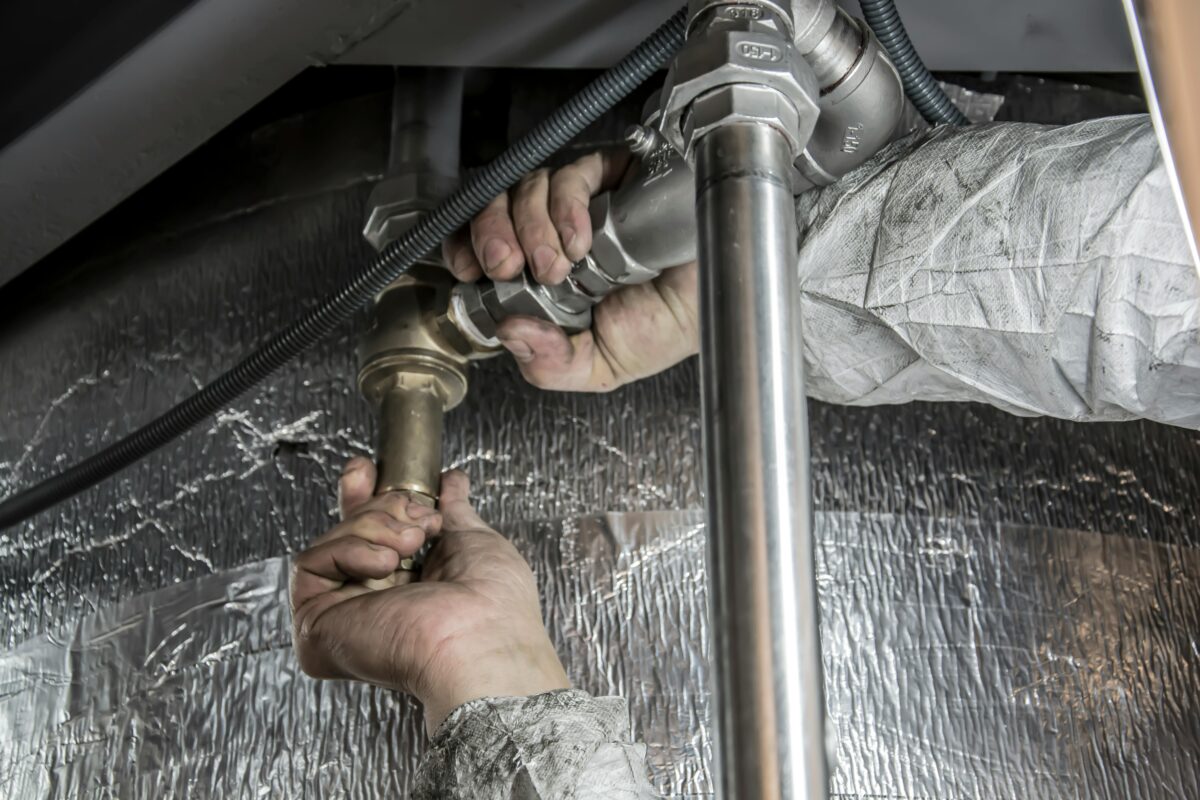
Despite the warm weather you may be enjoying as you read this month’s issue, we New Englanders know all too well the joys and heartbreaks of winter. While I’m writing this in Spring, and you won’t read it until we’re (hopefully) enjoying summer, I promise winter will return. The snow this past season was fantastic, but can we talk about frozen pipes? … I found myself talking about them a lot, as well as their nastier relation, failed sewer pipes, which respect no season.
It’s one thing for the pipes in a single-family dwelling to freeze and burst or fail, and entirely another for them to do the same in a home connected with others, as many common interest community dwellings – units, to lawyers – are. That’s especially true if units are stacked: a burst pipe in an upper unit may cause more damage to the unit below it than in the unit where the leak itself occurred. Determining who is responsible – and for what – can be challenging.
The following thoughts are necessarily general – for legal advice, you need to talk with your lawyer – but will, I hope, start some conversations and help all of us be proactive.
What Law Applies
Let’s start with the ground rules. First, what law applies? That’s usually an easy question, but Vermont has many common interest communities created before January 1, 1999, so in this case, the answer is the dreaded “it depends.” Residential condominiums and planned communities created after January 1, 1999, are subject to the Vermont Common Interest Ownership Act (the CIOA); condominiums created before that date are subject to Vermont’s Condominium Ownership Act (let’s call it the old law), as well as some portions of the CIOA. These “pre-existing” communities can amend their governing documents to adopt the CIOA, or parts of it, so the line isn’t always crystal clear.
Who’s responsible for what?
The old law provides that the common areas will be the responsibility of the association, but doesn’t address units, and doesn’t address portions of the common areas serving only one unit. It allows the declarant to allocate responsibility for units in the declaration or bylaws.
The CIOA removed this uncertainty by establishing a clear default: unless the declaration provides otherwise, the association is responsible for the common elements, and the owner is responsible for the unit “except to the extent provided by the declaration and subsections 3-113(b) and (h).” Declarations under CIOA often modify this allocation by, for example, making the unit owner responsible for the limited common elements they enjoy.
Let’s get back to that exception: it addresses insurance.
The old law authorizes the board to obtain insurance and requires it to do so if the declaration or bylaws so provide, or a majority of the owners vote to do so, or at the request of a first mortgagee. Under those circumstances, the board must insure the property, and the policy must be written in the name of the association as trustee for the owners in accordance with their allocated interests. The association’s insurance does not limit the right of any owner to insure their unit.
The CIOA goes into more detail, but it’s in a section that doesn’t apply to pre-existing communities. I’ll just skim the surface here. It requires the association to maintain several types of insurance “to the extent reasonably available and subject to reasonable deductibles,” including property insurance on the common elements against physical loss covering at least 80 percent of the value of the property (determined annually) at renewal of the policy. (The other required insurance isn’t material here.) Where the units are attached, this insurance must include the units, if such insurance is reasonably available, but may exclude improvements installed by unit owners. In other words, if the owner replaced linoleum flooring with parquet, the association need not maintain insurance sufficient to cover the parquet. If the required insurance isn’t reasonably available, the association isn’t required to maintain it, but must so notify the owners.
Proactive Steps to Address Insurance
There are many variables at play here as you can see, and with all due respect to our insurance professionals, insurance isn’t usually a popular topic, but it’s one boards should address proactively in light of the facts that apply to their communities. Here’s a start:
- Determine what law applies.
- Determine what the governing documents require and allow, and if they don’t align with the goals of the association, consider amending them.
- Work with the association’s insurance agent to identify the coverage and deductibles appropriate for your association, and any measures that might be taken to minimize risk.
- Identify critical infrastructure elements, such as water shut-off valves.
- Communicate with the members of the association to ensure that everyone is on the same page with respect to all of the above.
This article originally appeared in the June 2025 edition of CondoMedia.